ETF Battles: Growth vs. Yield - DGRO vs. FDVV, Dividend Showdown
Well, dividend investing is not dead. It's evolving, and ETFs are leading the charge. Do you want consistent dividend growth, or do you want high yield? What are you seeking? Maybe you want to have a lower yield with potential higher capital growth down the line.
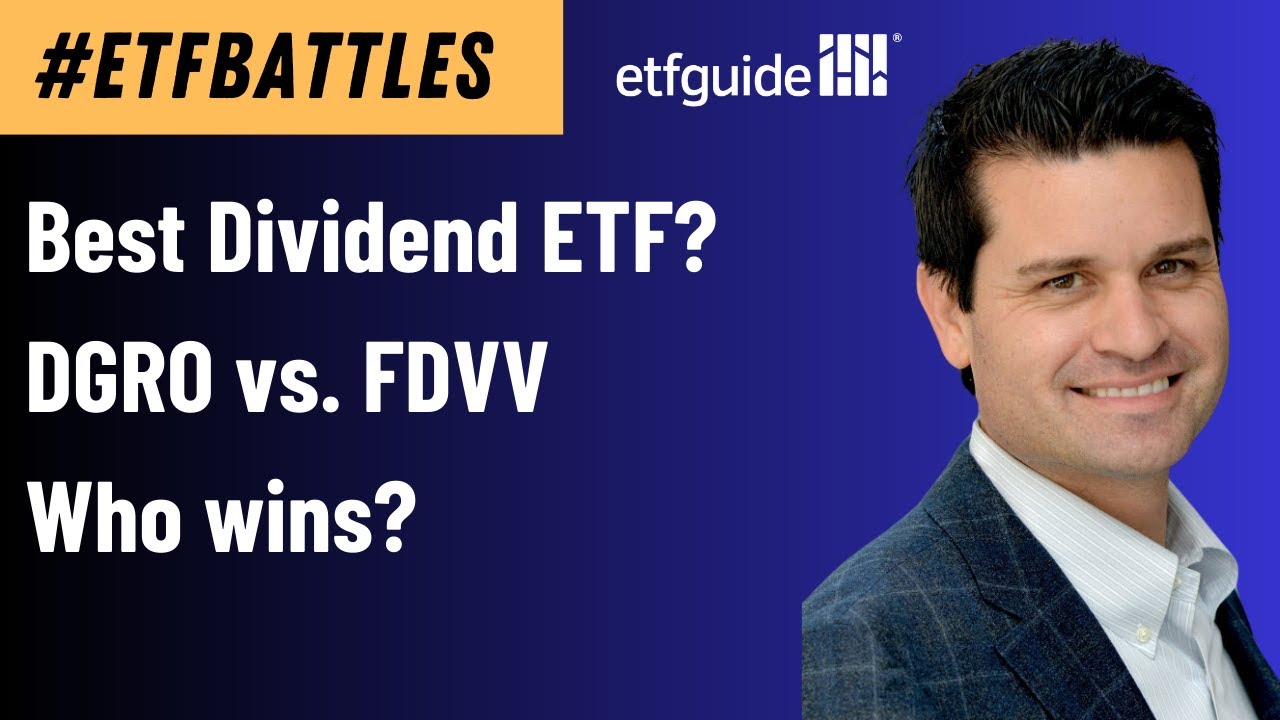
Today's audience requested ETF battle is a heavyweight bout between dividend ETFs from Fidelity and BlackRock. It's DGRO versus FDVV. Which is the better choice? Stick around. This is ETF Battles. I'm Ronda Legy, and this is the place that we gather together to analyze and judge ETFs.
Send me your ETF matchup request in the comment section below. Be sure to include your ETF ticker symbols. We could do double, triple, and quadruple headers. And for those of you that are first-time viewers, hit the subscribe button to join our community. Also, don't forget to hit the description section below. We've got our program sponsor located there. Be sure to visit direction.com.
Today's audience requested matchup was from Michael Kappler. This is a viewer who requested FDVV from Fidelity Investments versus DGRO from BlackRock. This is a heavyweight bout between two dividend-focused ETFs. So, which is the better choice? Well, judging today's contest, we got a duo extraordinaire, John Davi with Astoria Portfolio Advisors, and Athan Ferris with Bloomberg. Guys, welcome back. Great to have you.
>> Hey guys, nice to see you. >> Good to see you guys.
We got our four battle categories: cost, exposure, strategy, performance, and yield are combined. And then mystery. I'm going to give each of you an opportunity to weigh in with your analysis. At the end of the program, we will declare an overall winner. Keep in mind that none of the battle outcomes we do on this program are ever known in advance by myself or our judges. So the first category is cost. John, please get us started.
Sure. DGRO is eight basis points. The Fidelity product is 16 basis points. So DGRO is cheaper. If you're sort of a buy and hold, you're not going to trade in and out, DGRO is an interesting product for sure. But I think everyone should think about total return and they should think about trade and liquidity. I'm sure Tom Eton is going to talk about trade and liquidity, but when you start comparing actually how these things return and how they perform, it's a very different story. But just purely on management fees, DGRO is a winner by eight basis points.
Athan, you're up next. How do you see it when it comes to cost? Yeah, all good points, and I know what the performance is already, right? But obviously just by choosing something necessarily because it's cheaper headline doesn't always mean it's better performer, but to John's point, if these are long-term plays, which dividends a lot of times are, you want to try to minimize cost as possible. Eight basis points for the DGRO product, it's massive. It's 33 billion versus 5 billion for the Fidelity product. They're all US stocks, so they both trade really well. I just think it's pretty, it's half the price of the Fidelity one. So, I think just from a headline perspective, you have to give this one to DGRO.
All right, let's get into exposure strategy and compare these two ETFs versus each other. Athan, you're still up, so break it down for us.
Sure. So, they're both dividend-focused, but they're a little bit different. The Fidelity one is called the High Dividend ETF. So, as you can imagine, it's going after, it's looking at yield companies that have the highest yield. It's also got another factor in there like payout ratio, like how much is the potential for them to keep raising the dividend and dividend growth versus DGRO, which is just more stable companies that have consistently raised their dividends. So Fidelity one is also very concentrated. It's only 100 names. You get almost 400 in the DGRO product. So it's a little bit more watered down.
Just be aware with this, you're going to have a little some different sector tilts. So with the Fidelity product, you tend to be a little bit overweight tech than the DGRO product. It would overweight financials. So just be wary of like kind of the different sector weights that you'll have. This is a tough one. I don't know if one's necessarily better. I think if you want something that's more kind of stable and quality, the DGRO one, lean towards that one. If you want something that just has highest yield or has the potential to keep raising, have FDVV. I think I'm pretty split on this one. I think they're both really unique methodologies. I don't know if one is necessarily that much better. So I think I'm going to do a split decision on this one.
Thank you, Athan. John, you're up next. Exposure strategy. How do you see it?
Well, I'm going to do my usual screen sharing. Just give me a moment here. I know you like when I share my screen. >> I love it. You always shock me with new and surprising things.
All right. So I think it's nice to talk about dividends, something that's, people like Warren Buffett have been doing for decades and decades because I feel like everyone all they want to do is talk about AI and sort of Bitcoin and growth, right? But in your portfolio when you construct a portfolio, you should have diversification, that's sort of what we preach to our financial advisors. So a lot of the core of your portfolio could be in something that looks like low-cost index beta. But if you think about your traditional 60/40, you shouldn't put all 60% in low-cost beta. You should have diversified factors, diversified sectors.
So, dividends which have been largely ignored, the last two, three years as we've had this epic AI-induced rally, you really want to load up these two ETFs into a portfolio construction tool. You could use Bloomberg Port, Athan's firm, or something like a Vanguard, which is free for advisors. So, when you load it up, you kind of see how these things shape up from like a style box standpoint, valuation standpoint. We principally at Astoria, we're a high conviction asset manager. We don't like using, we like more concentrated portfolio. So FDVV sort of fits our style box, right? 100 securities. The ETFs that we manage, PPI, for instance, has like 60 securities. ROE has like 100.
So I don't like buying like big blocks, you know, sort of like DGRO, which has 398 securities. What Tom also was alert to, I think makes a lot of sense, right? Where do you want to be in terms of sectors, right? So we we like tech. We like tech a lot. So FDVV has more tech exposure, which I think is very interesting. So I do like FDVV. We'll talk about performance in a second, which is not even like, I mean FDVV sort of blows out DGRO out of the water. So I'm going to be sort of partial to FDVV in this conversation. So purely from like an exposure standpoint, I like what FDVV is doing. So I'm going to give that as a category winner.
Got you down. That takes us next to performance and yield. And you're still up, John. So I don't want to steal your thunder. You kind of alluded to it, but break it down for us. How do these ETFs look in terms of performance and yield?
Yeah, I mean, so whether it's three months year to date, one year, three year, five year, I mean, it's substantial outperformance on a year-to-date basis. It's about 250 basis points. On a one-year basis, it's 400 basis points. This is FDVV outperforming DGRO. On a three-year basis, it's like 17%. So I mean it's just clear in a way. I mean, even on a 5-year basis, it's like 40%. So, clearly there's like an alpha signal that Fidelity has uncovered. And I wouldn't necessarily say like, I mean, one's doing one thing and one is one's giving high dividend yield in stocks, concentrated making a lot of idiosyncratic stock specific bets. DGRO is doing something different. It's dividend growers, right? So, it's companies that have steadily increased their dividend. So anyway, FDVV is a battle category winner across a number of like trailing periods.
Got you down. Athan, you're up next. How do you see it in terms of performance and yield?
Yeah, I agree. I think it's not even close. FDVV has higher yield because it's a high dividend ETF and it's got better performance. And again, a lot of it is a tech bet, right? It's got bunch of semiconductors in there. In hindsight, that's helped a lot. The concentrated nature of it has helped a lot. So, it's not even close. I think when you sort of look at any metric for a dividend fund, FDVV is the winner here.
All right, that takes us next to our mystery category. This is where our judges can give us a factor or thing that's crucial to this contest. Athan, what's your mystery battle category? Which of these two ETFs wins it?
So, one thing that we always like to look at is sort of concentration and how complimentary is it to something like SPY. So, you just have to assume a lot of people hold SPY already, right? So, it depends how you want to use this in your portfolio. Like if you want this to be your core holding and replace SPY just because of the bigger tech weight in FDVV, they want to make more sense. But if you're looking using it as a complement, if you're maybe afraid that you have too much tech exposure, you're getting in DGRO, but you have a much more diversified play there to counter the S&P. So, I think concentration is something to just keep aware of. Again, it's helped FDVV. I like it. Again, it depends what you're using it, but I think as a core, DGRO makes a little bit more sense. A little bit more stable. It's a little bit more diversified. Again, it all depends how you think we are in this cycle. Do you want to load up more on tech? But I just think as a core, DGRO offers a nice diversified basket compared to the other ones. So, sort of concentration diversification, I'll give it to DGRO.
John, you're up next. What's your mystery bat category? And which of these two ETFs wins it?
When we, you know, as an asset manager, we pick ETFs, we build portfolios for advisors, a lot of times like when we figure out where we are in the market cycle and we determine our tilt to where we want to be and we have a choice of ETFs, we put it through like this, you know, let's say four factor model, which is a combination of P ratios, growth estimates, estimate revisions, earnings momentum. So I was sort of taught in the late 90s when I was in quantum research at Merrill Lynch that you want to buy, you know, an asset class, a stock, a sector that has low valuation. So let's just use P ratio as a valuation metrics where there's high growth estimates, there's strong estimations and there's solid earnings momentum. So you want this sort of matrix of like, you know, GP ratios, good growth, good customer revisions, good momentum on the earnings front and Fidelity does check that box, right?
And I just put in some of these other dividend ETFs here for comparison and then like SPY as just your anchor to compare it to. So some of these other dividend ETFs you'll see they have higher valuations or they're not as strong customer revisions or the growth estimates are lower. So I think there's definitely like an alpha signal that Fidelity has uncovered. And so it wins on a number of different, you know, multifactor valuation framework that we use when we screen our ETFs.
Okay. So now we move to the part of the program where our judges can give us their overall winner. John, your final chance to weigh in.
Well FDVV has good performance. It's got good valuation metrics. It's got a highly concentrated portfolio. We are a high conviction asset manager. And when we pick ETFs to outperform our benchmark, we want ETFs that have high conviction themselves and FDVV certainly does. DGRO is a good product. There is an audience that uses low cost broad exposure building blocks like DGRO, but for what we do for how we manage money, I'd give it to the Fidelity product.
Athan, your final chance to weigh in with your overall winner.
Yeah, it's tough. Like John said they're both good products. DGRO is great too. I think it depends how you want to use it. Again, as I was alluding to before, core versus like a satellite, but it's really hard to argue with FDVV. Like even the yields are not that far apart. It's like 3% for the Fidelity product, 2% for the BlackRock one, but the performance you're getting is so much different, right? And it's really hard to argue against that. And you know, they have they they're more of an AI bet, which is working. And so I think just overall the Fidelity product, it's a little bit different and again the concentration helps. So really close, both great products. I think if you're looking for dividends, you'll be okay with either one of them. But I'll give this one to the Fidelity product.
All right. Well, our judges have spoken and according to my final battle scorecard, today's winner is going to be FDVV from Fidelity. And our judges agreed on most points and FDVV as pointed out you're seeking higher current income that's the choice also if you're more comfortable with a more concentrated portfolio of large cap value stocks that's what you're getting with FDVV especially concentrated to the tech sector and also as pointed out DGRO better suited maybe for investors who are prioritizing long-term dividend growth with maybe some broader diversification and lower fees. So, a lot really depends on the portfolio application, but our judges did a great job in breaking it down for us. Well done, John and Nathan. We appreciate you making the time here on ETF Battles.
>> Thanks for having us. >> Yeah, thanks for having me on.
Hit us up in the comments section below with your ETF battle requests. And that does it for today's episode of ETF Battles. Thanks for watching. Be sure to subscribe and tell your 10 million friends. We'll see you on the next episode.