ETF Battles: IWM vs. VXF - Small‑Cap Showdown!
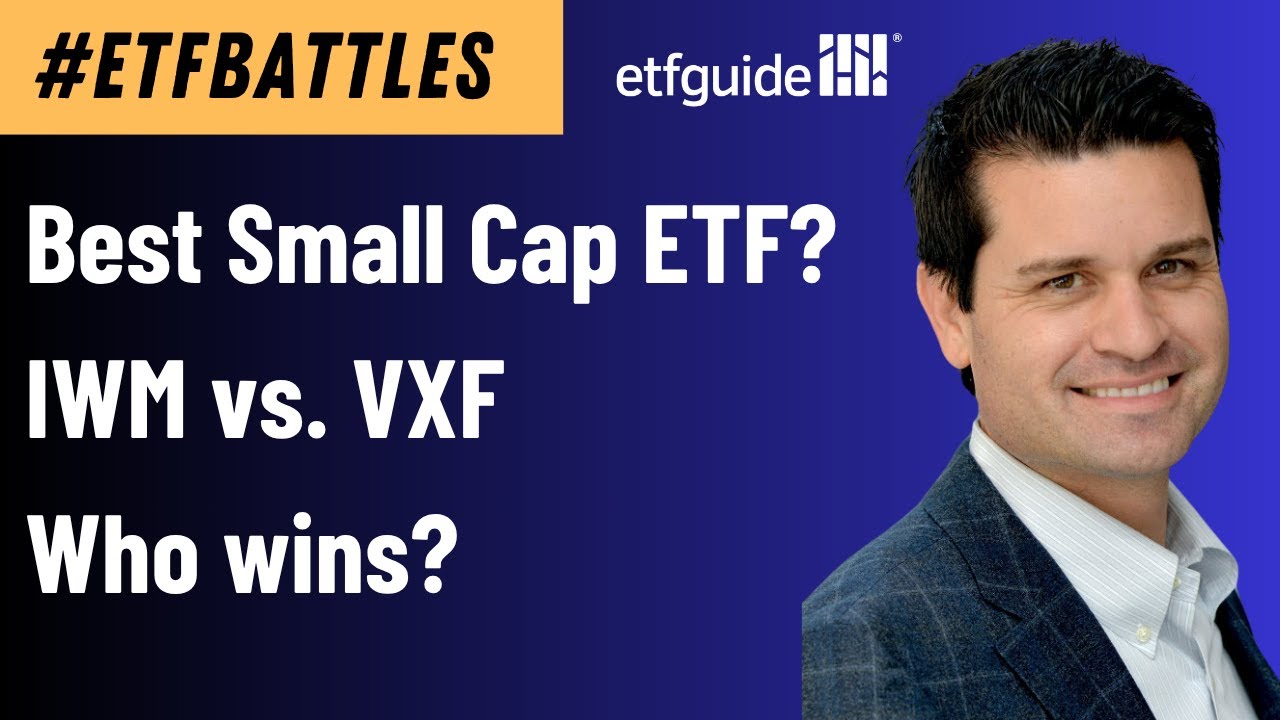
Well, big returns don't always come from big names. Today, we're diving into the overlooked corner of the market, where innovation meets opportunity: small and midcap stocks. So, let's unpack why they might be your portfolio's secret weapon. Today's ETF battle is an audience requested heavyweight bout between small cap ETFs from BlackRock and Vanguard. This is going to be good. Stick around. You're watching ETF Battles.
I'm Ronda Ley and it's great to see you again. If it's your first time watching, we're glad you found us. Welcome aboard and be sure to hit that subscribe button to join our community. If there's a certain ETF battle you'd like to see, send me your ETF ticker symbols and do that in the comment section below or on our X feed at ETF guide. Be sure also to check out our season 6 playlist which is in the description section below. Make sure your desired matchup has not already been done.
I'm excited to announce that we just launched two free online courses, Habits of the Investing Great and Retire Securely. So, both of those courses are available and totally free to all of our viewers. Just hit the enrollment link in the description section below. Let there be no doubt that we are committed to upgrading your investing skill set. Also, in that same description section below, we've got links to our program sponsor Direction along with leveraged and inverse choices on broad market indexes.
There's lots of choices to ETFs linked to industry sectors along with bag 7 and single stocks like Nvidia, PL, Palantir, Tesla, and many others. So, be sure to visit direction.com. Today's ETF battle was suggested to us by a longtime viewer named Jay Dilks. He sent this to us on his X feed or our X feed at ETF guide and he specifically said that everyone needs exposure outside of S&P 500 and this particular matchup he suggested and I think it's a good one. It's between BlackRock and Vanguard, two familiar ETFs and they've been around a long time, IWM and VXF.
Judging today's ETF contest is an duo extraordinaire. We've got David Derkin, an independent ETF analyst, and Mike Aikens at ETF Action. Great to see both of you again. Welcome back. >> It's great to be here, Ron. Thanks for having me. >> Thank you. Good to be back.
So, our four battle categories are cost, exposure, strategy, performance, and then mystery. For mystery, that's where you, our judges, can decide on any factor or thing that you feel is crucial to today's contest. Of course, our judges can nominate wildcard ETFs if they feel there's better choices elsewhere or they can opt for split decisions. It's up to them. I've got the scorekeeping duties and at the end of the program, we will declare an overall winner. Keep in mind, none of the battle outcomes are ever predetermined or known in advance by myself or our judges. So, let's kick things off with the first category, cost. Mike, please get us started. >> Well, another one of these wonderful stories of cost with the Vanguard fund. You've basically got a clear winner out of the gates. VXF charges four basis points as a completion vehicle. IWM is the liquidity king. If you want to do large institutional trades, there's no question it has better spreads, but VXF is still tight, very low spread at three basis points. Whereas IWM is pretty much free to trade in terms of the spread, but the expense ratio being a 15 basis point difference from a buy and hold perspective, it's pretty clear winner for VXF.
That's a solid start. Thank you, Mike. Dave, you're up next. How do you see it when it comes to cost? >> Yeah, I see it exactly the same way. I really don't have much to add. From what Mike just said, VXF has clearly the lowest expense ratio. Even though it's a smaller fund, it still trades really well. Spreads are tight. So, VXF is the clear winner here.
All right. Well, that takes us next to Exposure Strategy. And this is where we break down what the funds actually do, what they hold, and so forth. So, Dave, you're still up. Break it down for us. How do these two funds compare? >> Yeah, IWM focuses on the Russell 2000, which is weighted by market cap. So, you're looking at stocks 1,00 3,000 roughly on the US stock market. VXF is tied to the S&P completion index, which basically invests in the entire US stock market outside of the S&P 500. So, you're going to be looking at stocks pretty much 501 through about 3,900 or 4,000.
So, because it starts right outside the S&P 500, VXF is going to have slightly larger company tilt, you're going to get midcap exposure, more midcap exposure. IWM is going to be a little more of a pure small cap play. I'm going to throw out a wild card here. I'm going to mention the Vanguard S&P 600 ETF, VIO. As the name suggests, it's investing in stocks 900 through 1,500 in the S&P rankings. So, you've got kind of a balance between VXF and IWM as far as the stocks that it targets.
The one thing I like about VIO though is that it puts a quality screen on there. Companies that make that index have to have a positive positive earnings. So, it screens out any of those zombie companies or any of those companies that are losing money. And I think that's really important when you're investing in small caps. You want kind of a fundamental quality tilt there to screen out some of the garbage. So, I think that one's fundamentally better. Again, that's important when investing in small caps. So, I'm going to go with the wild card. Vio is my winner here.
Thank you, Dave. Mike, you're up next. How do you see it when it comes to exposure strategy? >> Yeah, I mean I think Dave laid out the major points in terms of you know you have two really maybe not comparing apples and oranges, but we're certainly apples to apples. We're not certainly not comparing apples to apples. We might be comparing apples to oranges. We might still be in the same food class here, but they're very different, right? So just get to maybe to illustrate Dave's point a little bit more, the completion index means that you're holding every company that's not in the S&P 500.
The S&P 500 is not like the Russell 1000 that just owns the largest 1000 stocks. It's a committee-based index. So, for example, as we know just recently, the S&P 500 did not add Micro Strategy. Micro Strategy is a hundred billion dollar company. It's not small cap. It's not midcap. That is a big company. That's part of the completion index or Applovin $125 billion market cap. because it's market cap weighted.
It then it's overall waiting angle, you know, looks more like almost large cap, right? It's weighted average market cap is 22 billion compared to IWM which has a weighted average market capitalization of 4 billion. Very very different portfolios. You know, VXF basically owns every company in IWM, but when you compare them by an overlap perspective, there's only 34% overlap. that other 66% is coming from the 500 names basically that are that are in the Russell 1000 that aren't in the S&P 500. So just a very different concept, right? It's called the extended market index or a completion index for a reason.
The idea is it's completing out the S&P series for those that want to own the S&P 500 and then also get access to the total market remaining. That's it's a very fair option, but there I really don't think you can compare the two strategies. As far as which one I like better, if you're looking for beta exposure to small caps, IWM is a great great play. If you're looking for strategic exposure to either midcap, small cap, I don't think either one of these is a great play. I think the world has changed in small cap investing, midcap investing.
I'll get into that a little bit more as we talk about performance, we talk about our mystery, but just in general, there's a lot of great options when it comes to investing in small and midcap, but the idea of owning the market has fundamentally changed because of the way companies come to market with their IPOs being much larger than they used to be. So, that whole idea of owning them and letting them grow is kind of lost. So, I don't really have a winner per se. I really just don't I'm not gonna call them both losers because they're both really good access vehicles, but I just don't think you can really classify one or the other as a winner.
All right, so I've got you down for a split decision and I don't think the dimensional small cap value cult is going to like you very much, Mike. That takes us next to performance. So, Mike, you're still up. Break it down for us. How do these two ETFs compare? >> Well, just by be given the regimen of the market we've been in, VXF is your winner. It's because it's got a tilt to larger cap names. A larger cap has done better than small midcap over the last decade and therefore it's return structure is the winner. It's the clear winner across the board. You know, Russell is going to be a better beta play on small cap. So, if you're making a bet, it's really hard to beat a beta play like the Russell one, the Russell 2000, IWM. But performance, you know, is pretty clearly been to VXF because of that tilt to mid and large cap names away from small cap.
Dave, you're up next. How do you see it when it comes to performance? >> Yeah, Mike pretty much said everything that I was going to say. That that midcap tilt is is causing the pretty significant outperformance of VXF over the last last 3 years or so. It's about 4 to 5% annually over the Russell 2000, the IWM. So, that shouldn't be surprising. Longer term performance not quite so much of a gap, but yeah, clearly anything that has a large gap tilt has has performed better recently. So on pure performance, VXF is the winner.
I still think the Russell 2000 sounds like a vacuum cleaner. >> Little bit vacuum up vacuums up 2000 stocks. >> All right. I think you're thinking of Bissell, not Russell. >> Oh, that's what I'm thinking of. You're right. The Bissell 2000. Okay. That takes us next to the mystery battle category. This is where our judges can name a certain factor or thing that they feel is pertinent and relevant to today's contest. So, Dave, I'm going to ask you, what is your mystery battle category and which of these two ETFs stands out? >> Yeah, the topic I wanted to bring up with IWM specifically is the reconstitution or rebalancing strategy that it uses. It's it creates a potential drag for investor returns based on how it works. It essentially rebalances once a year in June, although I think that's switching to twice annually starting next year, but it essentially announces the companies that are going to get added and deleted about a month ahead of time.
So, if you're an arbitrageer or a trader, you know, you you start seeing some of that front running. These companies that are getting added, they tend to outperform in the leadup and then they fall back once they're added. And then the opposite happens with the deletions as well. So if if you look historically there's studies out there that say that that creates like a you know 20 to 50 basis point performance drag on the index just because of some of that coming and going that happens around the rebalance. So, it does tend to have a material effect, if not necessarily a major effect, but, VXF and all the all the funds that are tied to the S&P indexes, they tend to use more of a a rolling addition and deletion strategy.
So, there's no there's no single reconstitution day. It's sort of, uh, adding and deleting little by little as the year goes on. So you don't necessarily have some of that front running or some of that you know big change in in trading or liquidity that happens just around a single day. So this is more of a structural issue than anything. But I'll call the winner in this category VXF just because you don't have that you know big buy and dump certain just coming around one day for the index. You have it sort of spread out little by little throughout the year and I think that's better for investor efficiencies. Mike, you're up next. What is your mystery battle category and which of these two ETFs wins it? >> Well, I I alluded to it earlier. But my mystery is the really the change in how companies come to market. I've talked about this in past battles. When we've had small midcap setups, but long story short, when the big winners of today have come to market, they've come to market as large cap names, right? They they've stayed private for so long that when they finally IPO, they come to market and they're instantly elevated into the large cap indexes. In some cases, mega cap indexes, hundred billion dollar plus valuations.
So, you if you're going to invest, and I think you should invest in small and midcap companies. I think it's a diversifier. I think long term you'll still get higher returns by taking on more risk, but the dynamic has fundamentally changed from owning the market and letting your winners run, right? They come in, they IPO as a $10 billion company, they roll up to 100 billion, they graduate from small cap to midcap all the way to large cap. The market cap weighted owning the index, you participate in that growth.
Kind of the idea that your winners may not be as many but their winning is going to be so large that it'll outperform. That's how kind of market cap works, right? That's fundamentally changed with with small and midcap names. And the beautiful thing is that you have a lot of great options in terms of both great active management strategies factor strategies that are out there. You're going to pay a little bit more, but the difference is fascinating.
I'll just give you two examples of just Dave alluded to this earlier, but IWM right now has 30% of its companies on a weighted basis lost money last year. They did not make money. Right? So, out of those 2,00 stocks, 30% on a weighted average basis lost money, had negative net income on a trillion 12-month basis. the J R which is the S SNP which has a quality kind of tilt which requires positive positive earnings over a certain time period has 16%. So just in the screening of passive both market cap weighted indexes one's index driven committee driven but the the the difference is is large and I think that makes a big difference when you're picking from a large universe of stocks and there's so many that are almost speculative in nature.
It tilts that whole passive active debate in my opinion to active or at least to factor-driven strategies have a much higher chance of outperforming in that space. So my winner on the wild card is anything but these two.
All right, that's a lot of ticker symbols, Mike. All right, so now we've moved to the part of the program I I haven't had that before. I don't know how I'm going to put that on my scorecard. I'm gonna have to write every single ETF ticker or symbol. That's everything but these two. Okay, that's a that's a lot of writing. So, now we move to the part of the program where our judges are going to give us their overall battle winner. How will this go down? So, Mike, give it to us. What is your battle winner if you have one? with all of those negative thoughts on relative to this. >> Keep in mind that I'm talking about a strategic allocation to the space. IWM is still the king of beta when it comes to small cap. I want to make a tactical bet on small caps. I would recommend IWM every day of the week and twice on Sunday. It is a great trading vehicle. It gets you full access to the space. If you think small caps are oversold, they're going to rally. if there's a catalyst on the outwite, you're looking for a tactical bet into small caps. It's hard to beat IWM as a great way to play that. So, that's my winner. It's a great ETF used properly. If you're going to make a strategic allocation, I strongly encourage you to look at other options if this is a, you know, set it and forget it allocation to smaller midcap names. A lot of great options out there. And I think because how the world has changed, market cap is no longer the way to go with respect to these categories.
All right, Dave, your final chance to weigh in with your overall winner. Give it to us. >> Well, as much fun as it would be to declare this a 4,000 weight split decision on on everything, I'm not going to do that. My my winner here I'm going to go with Vio again for the S&P 600 ETF is the small cap space is you know such a good example of why you need to look under the hood of your ETF because all of these will be considered small cap ETFs but they're invested just very differently across a number of you know the number of stocks the the tilts you know whether you get midcaps small caps micro caps.
So, that that aside, I I do really appreciate the quality tilt that the S&P 600 uses. It's not going to solve all the world's problems in in investing in small caps, but I think if you can, get some of those bad apples, some of those, you know, zombie companies or those unprofitable companies, I think it really helps. Small cap value especially is, you know, particularly dangerous because a lot of those value companies are valued for a reason. So, anything that, can give you a bit of a quality tilt in in the small cap space, I tend to be in favor of. So, Vio is going to be my winner.
All right. Well, our judges have one thing. >> Yeah. Go ahead, Mike. >> Just to drive home Dave's point, if you look at since common inception of JR, which is the IO, same index. They're both tracking the S&P 600 versus IWM since the early 2000s. The S&P 600 has outperformed by over 300% cumulative in that time frame. It's a massive difference. It's 930% to 630%. They're both market cap indexes, but because of that quality tilt, whatever it may be, it's it's a very very big difference in total return. So, I just wanted to drive home Dave's point that he was making.
So, do you want to change your pick from my WM? >> Absolutely not. No, you are so stubborn. >> What? Why? What's the matter with you? >> You can still do better. >> What's that? >> You can still do better. >> Okay. Well, according to my battle scorecard, we've got Mike with IWM and Dave with Vio. Split decision. What do you think, audience? Weigh in. You know, I I did my best to try to convince Mike to change his and I don't do this often, by the way, but he made his arguments. He stuck with them. He, as he said there, as a pure beta small cap play, you're putting this inside of a an asset allocation and you're obviously wanting to complement that holding with other nondated holdings that don't own the same thing. So in that setting, IWM was Mike's or in that application, Mike preferred IWM. In in contrast, Dave made the point that S&P 600, which tracks small cap stocks, but with that quality screen, was his preferred way to play this particular area. And certainly that outperformance as both of our judges pointed out has been substantial for S&P 600 over the Russell 2000 vacuum cleaner. Well, great job to both of our judges for today's contest. We couldn't have done it without you and look forward to having you on the next show. >> Awesome. Thanks for having me. >> Yeah, thanks. It was fun.
Well, hit me up in the comments section below. How do you enjoy today's episode? Weigh in with your comments. What did you think about our judges and the points they made? I'd like to hear from you. And also, if there's an ETF contest or matchup you'd like to see, send it to us in the comment section below with your ETF ticker symbols, and we'll take a look at it. We could do double, triple, and quadruple headers. I'm Ronda Ley. Thanks for watching ETF Battles. We'll see you on the next episode.