Beyond the Index: Active Income and Equity Strategies for ETF Investors - First Look ETF
Hello everyone. You are watching the June edition of First Look ETF. I'm Stephanie Stanton. It is great to have you with us. Coming up on today's program, we're going to examine a new active ETF from Lazard Asset Management that scours the globe for companies with solid fundamentals and attractive businesses.
Also, we're going to have an update on value stocks and a new ETF from Allspring Global Investments with a novel approach to this area of the stock market. And finally, we are going to examine a pair of ETFs from Poland Capital with a unique income strategy. But first, before we go any further, we want to welcome Mal Leum joining us from the New York Stock Exchange. ML, it is always great to see you.
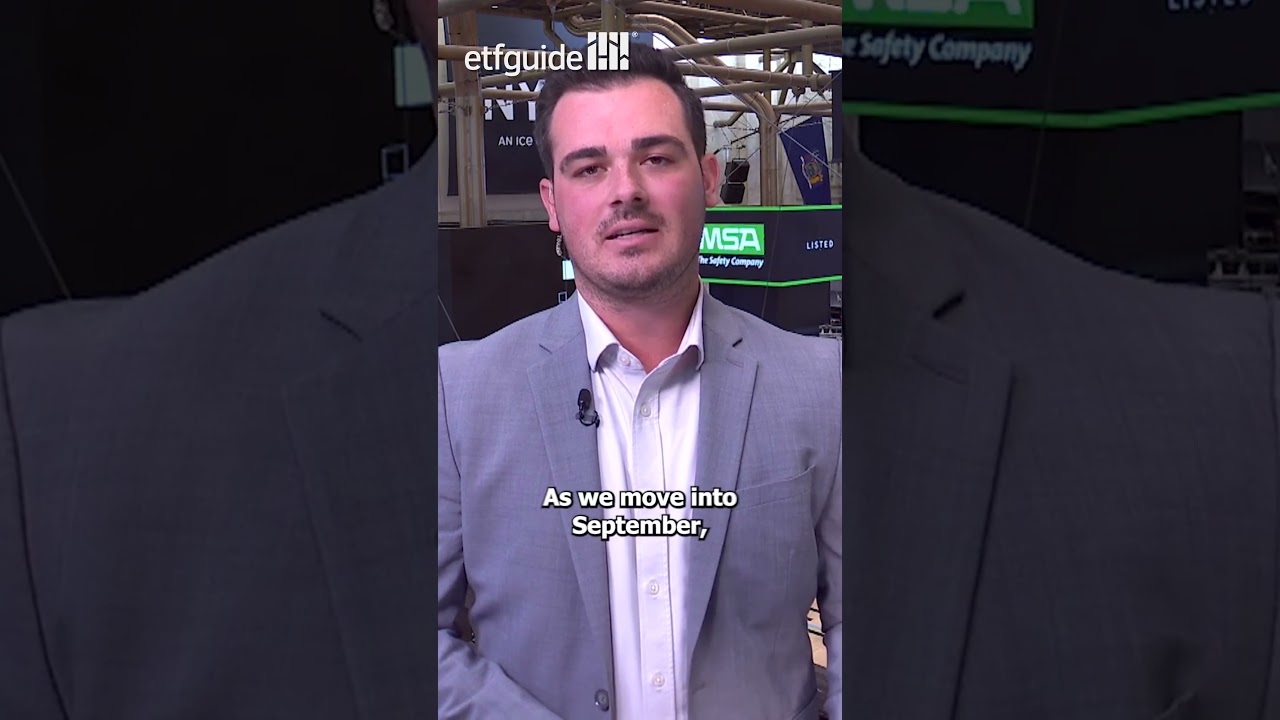
Great to be back for another episode. All right, we want to begin with the latest launch activity on the New York Stock Exchange. How are we looking? So, as we approach the halfway point of the year, we're really still well ahead of where we were at this time last year in terms of fund launches. May have just brought us 51 new ETFs to the market, the slowest months so far, but the overall pace remains record setting with more than 370 new fund launches this year.
Have also gained impressive inflows topping $465 billion and it's the total number of ETFs listed in the US now stands over 4200. And amid all the volatility in the financial markets has cooled a bit since April and the ETF industry has given both investors and financial advisors some tools for navigating these bumpy markets. What trends in the ETF market are you observing now?
So with a record number of ETFs hitting the market, over half of these funds are non-traditional and actively managed, issues are equipping investors with innovative tools that tackle diverse market conditions. We've seen a surge in buffered ETFs, option based strategies, inverse and leverage products, and alternative ETFs. Over the past year, with a robust pipeline of varied products still to come from traditional asset managers to niche strategies, ETF solidified themselves as to the go-to investment rapper.
So, at the NYC, we continue to focus on ETF education and the peripheration of the ETF vehicle and work closely with the ETF community to provide users with the best tools possible. So, I'd encourage you to head to ETF central.com and keep up on the latest trends in the industry. We have as always a great guest lineup. What are you most looking forward to, Mel?
So, I'm really looking forward to once again hearing from established traditional asset managers who've recently entered the ETF space. Lazard focusing on non-US equities debuting at the NYC with a mutual fund conversion. Poland Capital recently brought their deep credit expertise to the ETF rapper. And Allspring, an independent asset manager, has launched a suite of active ETFs in the US market. It's shaping up to be a really exciting show.
All right, Mel, thank you so much for the update. It's always great to see you and we will see you soon. And just a quick reminder, you can watch First Look ETF on Amazon Fire TV and Roku. We also simoc cast First Look ETF on iTunes, Spotify, Amazon Music, and other major podcasting platforms. So, be sure to check us out there.
Value stocks offer the potential of finding quality companies trading at discount prices. And of course, who doesn't love a good bargain? Well, value stocks are typically companies with businesses that are overlooked, undervalued, or temporarily out of favor. But locating them and buying them at the right price can be challenging.
Well, a potential solution is a new value focused ETF from Allspring Global Investments. And here to tell us more is Bryant Vancronite, senior portfolio manager and co-head of special global equity at Allspring Global Investments. Bryant, thank you so much for joining us here on First Look ETF. Honored to be here.
Thank you. So, the Allspring Special Large Value ETF and your ticker there is ASLV. It is among your firm's latest editions. First of all, congratulations. There are varying opinions right now about what makes a certain company or a stock a good value. What is your definition of a good value stock?
It's a great question because there's so many ways to find value on the value side of the ledger with investing. And what we do is we focus exclusively on how companies can use their balance sheet to create future value. We think that the market just habitually underestimates or underappreciates the journey that a company's balance sheet goes on.
Conversely, the market's really efficient and very actively involved at at estimating the change in income statements real time. We want to go and step back at the balance sheet, say, how can the company use available capital to drive a unique destiny in the future. And so, what we're looking for is we're looking at the current balance sheet compared to our view of their long-term optimal capital structure or optimal balance sheet.
And in measuring that, we can determine how much money the company can spend over our 3 to 5 year investment horizon. And then by engaging with the companies and understanding how they want to use that capital, we can begin to understand how they're going to use the various options in front of them such as acquisitions to expand their TAM, maybe vertical integration to control margins, organic investments through an R&D program or capex, or maybe just buying back stock or paying a dividend. All these are viable options.
And as they make those choices, it can have a very distinct and sizable impact on the future income statement. And we think the market does a bad job of valuing that optionality. So we find value specifically in measuring the company's balance sheet capacity and what it might mean for future earnings and future cash flow and whether that's underpriced by the market today or not.
Yeah, it makes sense. So ASLV is basically aiming for market outperformance with large cap value stocks with some upside potential perhaps some companies that might be out of favor, overlooked, etc. What are some companies that you guys are targeting as part of this ETF and what might we expect to see in terms of sectors inside a portfolio?
Yeah, the beauty of this balance sheet focus is that balance sheets provide a buffer in terms of tough times, but they also provide the optionality in the upside. And so a common company would be a name like Canadian Pacific Kansas City Southern. It's a railway company where the market focuses a lot on what's happening on the current income statement.
They think about global GDP trends, shipping volume, and they think about how that might impact future income statements. and it's relevant and that might push the stock price down in a backdrop like today where GDP is being questioned and trades being questioned. But what we see is the combination of two businesses that took place a few years ago between Canadian Pacific and Kansas City Southern and how those two businesses coming together create a powerful asset base that's highly unique, giving them the ability to move goods from Mexico through the US into Canada and back the other direction.
And the integration of that is going to expand significantly the total of market they have available to them. It'll expand the size of their topline growth rate and over time the synergies through precision railroading and the integration of assets will drive higher margin expansion. We think the market's missing that today.
So the portfolio has a lot of companies that look like that where the market might be worried about today's income statement but longer term the balance sheet provides unique optionality and you're going to see that across every sector. We are diversified across all sectors letting the stock selection drive results as opposed to stylistic or sectorbased decisions.
Yeah, it's interesting. It it kind of sounds like you guys are like, "Hey, look over here. This is interesting. Maybe things that people don't have their eye on at the moment." So, that sounds like a good strategy. Before we let you go, how do you see financial adviserss using this ETF as part of a diversified portfolio?
Yeah, our team, the Allspring Special Global Equity Team, builds all of our strategies to be designed as an all-weather strategy. Meaning, you want to be able to hold it through the entire cycle. We're not looking at trying to time the market with when does our process work, when does it not work. It's designed to be that core holding on the value side of the spectrum that you own through the cycle.
The reason being is that we are so focused on building efficient and smart portfolios that take a certain type of risk and certain level of risk, isolating stock selection as the driver and not making stylistic or sectorbased bets, which allows you to minimize the swings through the cycle. What you get with that typically is you get strong downside protection when the markets are tough.
The balance sheet strength, the cashless stability of businesses provides a buffer. During normal times, quote unquote normal times, our stock selection drives alpha. Historically, where our process is more challenged is going to be when the market's screaming higher in a very high beta, high offensive way. That's the most challenging backdrop for us.
But ultimately through the cycle, we expect to compound at about 2% annualized return above that of the marketplace. Bryant Vancronite, thank you so much. We're going to leave it there. We appreciate your time today. Thank you for having me.
After many years of underperformance by international stocks versus US stocks, international stocks have staged some pretty impressive gains in 2025. Besides catching the attention of investors, it is also a reminder about the importance of diversifying beyond your home country. Well, Lazard Asset Management recently introduced a new ETF targeting international stocks.
And here to tell us more is Kurt Livermore, director and portfolio manager at Lazard. Kurt, it is great to have you today. Thank you, Stephanie. Lazard Asset Management has been a leader in active equity products now for for several decades.
We do focus on bottom up meaning stock selection, portfolio construction to really fuel our approach. We particularly have a strong track record of generating alpha or excess return across product categories and geographies ranging from global to international to EM emerging markets using both fundamental and quantitative management capabilities.
I work on the Lazard advantage team and we are the quantitative team within Lazard. We really build upon the firm's fundamental research to build strategies that are both responsive to changing market dynamics but also resilient as well and we leverage these capabilities to provide differentiated products and certainly this ETF is one of those and a lot of it driven by client demand and finally we aim to differentiate ourselves by offering fundamentally driven quantitative management in a true core implementation with really focused on information ratio, meaning we want to essentially compensate our investors for any active risk being taken.
So, with that being said, you mentioned your ETF. Let's dive into that a little bit. The Lazard International Dynamic Equity ETF and your ticker there is IEQ, recently joined your lineup of ETFs. IEQ is actively managed. It is focused on international stocks. What types of companies and sectors might we see inside of it?
So, IQ currently owns around 240 stocks. obviously very broadly diversified represents companies across 11 global sectors in 35 countries. We really seek to add excess return by selecting individual stocks that are quantitative computer models predict will outperform their peers and the broader market.
Currently we're finding lots of opportunities in banks in places like the UK, France and insurance companies in Japan and Canada. We're also finding good stocks in Chinese media companies and also auto supply companies in Italy. And finally, we're really finding some opportunity spec in specific pharmaceutical companies in the UK and and in Switzerland.
But importantly, we are seeking to to mimic the the the overall universe, which is why we're so diverse. And it's really about picking individual stocks rather than individual countries or or sectors or taking that kind of risks. Yeah, that makes a lot of sense.
So then with that being said, how do you see financial advisors utilizing IEQ inside a diversified portfolio? Yeah, we've we've seen financial adviserss and individual investors utilizing IEQ really to give their clients kind of broad initial exposure to to markets outside the United States. And this has really started to peak interest to folks as as people realize that the recent volatility in the United States the expensiveness of of the US market looking for place perhaps similar companies overseas they're generally priced cheaper.
And our strategy IQ offers broad-based risk controlled exposure in international markets but it is active. We have historically delivered compelling returns above what a passive solution would would provide. And so we really see it as kind of a a first step away from those passive solutions, a bit more excess return and return generated for for our potential investors and gives them exposure outside the United States.
And finally, because the strategy is well aware of of of wanting to be compensated for any active risk we've taken, it's an efficient use of of that active risk. All right, Curt Livermore, we will leave it there. Lazard Asset Management, thank you so much for joining us here today on First Look ETF.
Investors seeking income are faced with many challenges, including duration risk to credit risk along with the uncertain cycle of changes to interest rates. Well, a potential solution is a new pair of income focused ETFs from Poland Capital. And here to explain is Michael Graham. He is a credit research analyst with Poland. Michael, it's great to have you with us.
Hi, Stephanie. Thanks for having me. Okay, before we dive into your firm's recently launched ETFs, can you familiarize our audience with the investment philosophy at Poland Capital? Yeah, of course. And before we dive into investing philosophy, maybe a minute of background on Poland Capital Capital was founded in the late 70s.
We manage approximately 60 billion in client assets. The majority of those assets are in our equity strategies. On the credit side, where I spend my time, we manage 7 and a half billion of client assets. Historically, our credit business has primarily served institutional clients where we have one of the longest and best track records in the high yield market.
So, I'm really excited that with the recent launch of our two credit ETFs, retail investors have a taxefficient, easy to access way to invest in our institutional quality strategies. Back to your question on investing philosophy, Poland's quite differentiated. The core of our credit investing philosophy is to build concentrated high conviction portfolios that have a yield advantage over the market.
And over the course of a credit cycle, we seek to harvest that yield advantage to generate alpha for our clients. Underpinning that core philosophy are a few key tenants. First, we employ a deep dive private equity style due diligence process with a differentiated view of credit risk that focuses on margin of safety.
Second, we run high conviction concentrated portfolios that allows me as an analyst and us as a team to be very selective and know our companies inside and out. Many competing strategies in the market will have hundreds of companies in a portfolio. What makes which makes it more difficult to know all of the underlying businesses well and dilutes the best ideas. So we think our clients benefit from that concentration.
Third, we benefit from mandate flexibility. Our Poland Capital high-income ETF can invest in bonds and loans, private and public companies, and we're relatively ratings agnostic. Many competing products in the market are more restricted by asset class or ratings category. So, we think it's an advantage to our clients that we have a larger hunting ground and we can focus exclusively on finding the best riskreward opportunities in our markets.
Lastly, we have a middle market focus. Simply put, the middle market is less covered by the largest high yield asset managers. It's less efficient and therefore more ripe for alpha generation through careful bottom-up diligence. So Stephanie, hopefully that gives you an idea of our investing philosophy.
It's the same philosophy we've been practicing for the past 30 years. It's time- tested and has a track record of delivering for our clients. Quite an impressive track record indeed. Okay, you mentioned your ETFs. Let's dive into those a little bit.
We have the Poland floating rate income ETF and that ticker is PCFI. Uh we also have the high income ETF which you briefly mentioned and that ticker is PCHI. both of them focused on generating income. Let's break each one down and then can you please compare and contrast them?
Yeah, absolutely. Our two ETFs have a few similarities. First, Stephanie, you're absolutely right. They both they're both income generating strategies and they both invest in the subinvestment grade debt markets that is high yield bonds and leverage loans which are the asset classes we've specialized in for 30 years.
Further both the Poland Capital High Income ETF PCHI and the Poland Capital Floating Rate Income ETF PCFI are underpinned by the same differentiated investment philosophy we just discussed. The main way the ETFs differ is the type of assets that comprise the portfolios. PCHI, Poland Capital High Income, invests primarily in high yield bonds, but can also invest in leverage loans.
PCHI is a more liquid version of our flagship opportunistic high yield strategy, which has been around for over 25 years and has generated top desile since inception returns for our clients. Because PCHI is primarily comprised of high yield bonds, you're getting a product with a similar duration or interest rate risk to the high yield market.
Conversely, PCFI, Poland Capital floating rate income ETF. That fund primarily invests in leverage loans. Most of these loans are first lean in nature, meaning they're the most senior debt in the capital structure and they're first in line to be repaid. And loans are floating rate by nature.
So the duration of that fund or the interest rate risk is comparatively lower. To give you a sense of what PCFI looks like today, we're talking about a portfolio with a yield in the mid 9% area. So to recap, both ETFs are high income products managed by the same team and with the same investing philosophy.
They differ in that PCHI is primarily high yield bonds whereas PCFI is primarily leverage loans. So then, Michael, how do you see financial advisors and investors utilizing PCFI and PCHI as part of a diversified portfolio? People want income uh and they can get investment income in a few ways.
The safest of which are money markets or treasuries. High yield bonds and leverage loans offer higher income and a higher expected return versus money markets and treasuries. However, high yield won't over the long run offer a higher expected return than equities, but it does offer high current income at a much lower level of volatility than equities.
So, it's a Goldilocks asset class in that sense. And we believe that high yield is an asset class that is best accessed through actively managed products like PCHI and PCFI. And because of the differing duration profiles of PCHI and PCFI, investors have the option between the two of how best to hedge interest rate risk in the context of their broader portfolios.
And we are going to leave it right there. Michael Graham, thank you so much for your time. We appreciate it. Thanks for having me. And that does it for this episode of First Look ETF.
If you liked the show, feel free to tell us in the comments section below and by hitting the like button. Want to give a big thanks to all of our guests today, including Mau Leum from the New York Stock Exchange. If you'd like to learn more information, you can check out ETF Central.com. I'm Stephanie Stanton with ETF guide. Thanks for watching. We'll see you next time.