ETF UPDATE: Gold, Silver & Miners Fall, Beware of Money Market Funds + More
Well, this week's big news was the nomination of a new Federal Reserve chairman. Plus, we saw a sharp pullback in the price of Bitcoin and precious metals along with gold miners. Is the bull run over? I don't think so. Let's take a look at top ETF performance and get into it. Welcome to the program. I'm Ronda Ley with ETF guide. Let's take a big picture view at financial markets and the ETF's tracking them.
We've got five major areas or assets in this chart. This is a year-to-date chart. It's since the beginning of the year, and it is through the end of January. Yeah, January is over, folks. And this is your big picture view of how 2026 has been performing. S&P 500 up about 1 and a half percent. Bonds pretty much flat, and Bitcoin actually was the top performer a couple of weeks ago and now it's the bottom performer of this group when we compare it to major asset classes like stocks, bonds, real global real estate and commodities.
Bitcoin is in a funk and commodities, we're going to talk about gold and silver and gold miners in a second, but as a group commodities are still a strong performer. They're up a little over 8.8% since the start of the year. That's very good. Global real estate's also been a good performer, up about 3%, not including dividends. So, that's your big picture view. I we're going to delve into commodities in a second because I've got an ETF I want to share with you that I think is a great ETF. If you want exposure to commodities, stay tuned for the ticker symbol.
Let's take a gander though at S&P 500 earnings because we're about one third through earnings season and their reporting has been pretty good. See the green line represents earnings for all 11 sectors. Each of those bar charts represents or is linked to specific sectors. So the green represents companies that in a certain sector that have reported above analyst estimates. So that's good. When we see lots of green, there's been upside surprises in terms of earnings reports so far. Yellow represents reports that have been right in line with what analysts were expecting. And then red are disappointments. So, lots of green and yellow. That's good in terms of earnings for S&P 500 companies.
And you'll notice the best earnings have been from three sectors. Communication services, energy, utilities, and also information technology is another one that's had very good earnings to the upside. But now let's take a look at the performance because the performance here illustrates a few important things. And you'll notice that those two top sectors, energy and materials are typically associated with commodities. And that has certainly higher commodity prices have lifted these two sectors, basic materials and energy sector. Those are the two top performers within the S&P 500.
And then you've got consumer staples, which has historically been a defensive industry sector. Very interesting. So we're seeing a little bit of defense and commodities. Commodities obviously linked people are looking for defense in terms of defense towards inflation or against inflation. And then we've also had a weaker US dollar which has certainly contributed to higher prices. Now in terms of some of those lagards we see weak performance coming from financials, technology and health care. So those are the bottom performers.
Now, in terms of commodities, here's a chart I wanted you to basically understand. We've talked about it often. Ticker symbol SDCI, which is a ETF that tracks a basket of different commodities. And I want you to understand the magnitude of SDCI's performance over its peers. It's not just any regular normal commodities ETF. It's a great core fund. If you want exposure to commodities, got commodities? Well, if not, then get SDCI because over the past three years it has whipped its peer group in terms of performance up over 51%. The second closest is GCC which is a equal weighted commodity strategy up almost 38% and then the other is not even close.
So SDCI you know over the past three years and this is interesting too because we've been in a pretty strong bull run to the upside in terms of commodity prices and SDCI has been delivering all of that and more. So what the heck does it do? Well, it's an ETF that tracks a basket of different commodities. It's not just a plain vanilla index. It has a little bit of a tactical waiting and it owns all those commodities that you've probably been hearing about in the news, things like natural gas, which have natural gas prices have been skyrocketing. Also, you got precious metals inside the portfolio. You got energy commodities like crude oil as well as gasoline. And also cocoa, nickel, a whole bunch of other commodities.
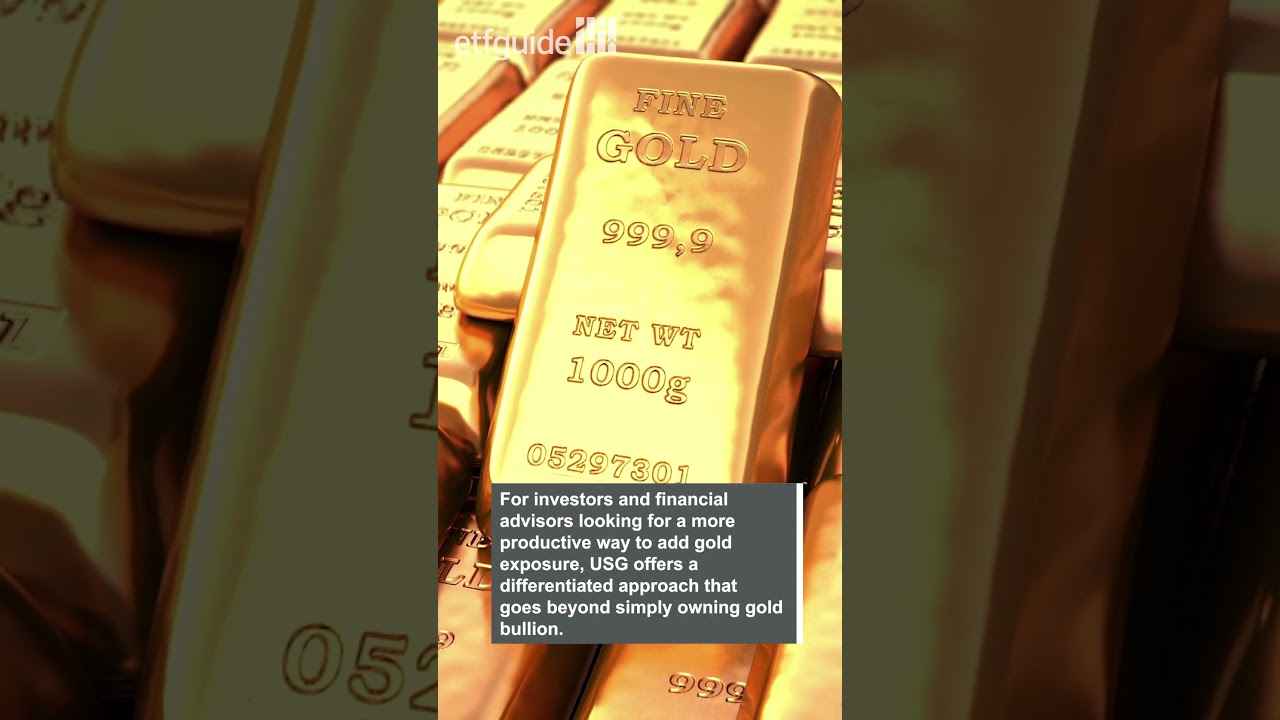
But again, SDCI does all the heavy lifting. Great core ETF for core exposure to commodities. The expense ratio with the fee waiver is 60% annually. And again, it's delivered excellent performance and I think it's worth definitely checking out. Now in terms of other areas linked to commodities, this one focuses specifically on precious metals which have experienced a sharp pullback over the past week. We saw obviously leading up to this parabolic performance by silver, silver miners, gold miners, gold have all been super hot performers to the upside. And this past week we saw a sharp pullback which I think is a pause.
It's a pause. And you know what? This is sometimes what you see in sharply trending markets. You see volatility return and actually that's good. Shakes out some of the weak hands and also establishes a floor for the next leg up. And as far as gold is concerned, as far as finite assets are concerned, you can include Bitcoin into this conversation. You asking, you know, where is the upside? What is the upside potential? What's the ceiling on prices for silver and gold as well as copper, a much in demand commodity that you're starting to hear more about as well as Bitcoin, the upside potential and also the ceiling is the same as the ceiling on runaway government spending, the ceiling on runaway government budget deficits and runaway national debt, all of that.
So whatever the the ceiling is to that the craziness and chaos that's causing that's the same ceiling that I see in terms of this run in assets that cannot be manipulated like the like fiat currencies as well as national debt. So keep an eye on that. I think again this is a trend that is going to continue and you're going to have an occasional pause like we had this past week. So do not be worried.
Now I want to talk about something that will probably irritate the baby influencers and the school boys and school girls that just want to show you what's hot. That's all they want to talk about. Show me what's hot. Well, we could talk about that, but we can also talk about big boy and big girl adult stuff like money market funds which control a considerable and inordinate amount of national wealth here in the United States. You'll notice I have crossed out the top 15 mutual funds by asset flows in 2026. And look at how much money these companies are vacuuming in. Fidelity, JP Morgan, Schwab.
These money market funds are taking in a lot of money. The top three took in 61 billion, 60 billion, 59 billion. And look at how much assets they control. The Fidelity Fund has almost half a trillion dollars in assets. Look at that expense ratio. 42 basis points. My goodness. They are just cleaning house over there at Fidelity. 42 basis points for a money market fund. Are you kidding me? That's an absolute robbery. That's bank robbery. In this case, we'll call it money market robbery. Is anyone paying attention? If you own any of these mutual funds in your portfolio, I would go on a seek and destroy mission and eliminate them.
You got look at this JP Morgan one charging almost 60 basis points again highway robbery just asinine cost for money market funds those are the ones that have vacuumed in the most money and are investors really paying attention are money market investors I mean this is clear to me that they're people are asleep at the wheel they're not paying attention to the things they should be paying attention to John Bogle taught us to pay attention to cost and to minimize it to the greatest degree possible. And that's why Ronda Ley has for you better alternatives, better solutions.
Here's ETFs that that are comparable to what you might get in a money market fund. Most of these are linked to short-term US treasuries. Some of them have some floating rate bonds and high highly rated corporate bonds to get a little bit higher yield. But look at the expense ratios when you compare them to what these other top money market funds are charging. Much lower expenses than what the mutual fund industry is offering. So again, you want to keep this and rewire your brain to low expense ratios are good for your portfolio. They're good for you. They allow you to keep more of your performance returns and more of your yield, all of that in your own wallet instead of a some mutual fund company or portfolio manager. So again, I wanted to bring this to your attention.
And by the way, we're going to talk a little bit about safety because some of you are using misusing money market funds for safety inside your investment portfolio. Money market funds are great as short-term instruments for parking cash because you're going to deploy that money in an investment or you've got some some purpose for it. Maybe you need it for a short-term expense that's that you're planning or that maybe comes up at the last minute. Money market funds are okay for that. Money market funds though can and do lose value. Now, it's very rare, but it can happen. And the fact that it can happen and they do not guarantee your principle, then that means they're not they're not suited for your safety bucket.
And I'm going to give you some context on that in a second. Let's take a look at another huge benefit of ETFs. This was a chart that was on LinkedIn from one of our good friends over at Federated Hermes, Brandon Clark, pointing out the tax efficiency of ETFs over mutual funds. And for a long time, not anymore, but for a long time, ETFs were demonized as short-term trading instruments. They're not suited for long-term investors. I mean, how long did I have to hear that? See, I've been in this the financial service industry for quite some time, over 25 years. So, I heard that for a long time. The the the there was a lot of haters. Well, you know what? They're not hating now because ETFs are superior investment vehicle.
They're better than mutual funds because not only do they have lower cost, not only do they offer trading flexibility, not only do they have intraday liquidity, but they also don't put any unnecessary tax burdens on shareholders. And here's a perfect example. What does the MAT say? Well, I'll tell you what the MAT says. 99% of all statistics only tell us 49% of the story 100% of the time. And that's why you have me here telling you what 51% of the story is. Well, here it is, folks.
You have mutual funds that are active and mutual funds that are passive. And then you've got ETFs that are active and then you've got ETFs that are passive. So passive, think about like things that are like index linked. Those are all passive. Active means you've got a portfolio manager making decisions on which securities to buy, to hold, to sell. They might do some trading. So, it's actively managed. Typically, you'll have more turnover in the portfolio with an active fund, but across the board, whether it's active or passive, ETFs continue to deliver as a percentage of funds paying capital gains getting distributed by category. They continue to deliver lower tax liabilities to shareholders and that's a huge win for ETF investors.
So, this applies to funds that you may own in your taxable account. So, if you got a taxable brokerage account, if it's a single account just or single owner or if you got a joint account or if you have a trust account and it's in a taxable money, this is the kind of stuff you have to be paying attention to. This, by the way, does not apply to ETFs or funds that you may hold in a tax deferred account like a retirement account, 401k, Roth 401k, IRA, or a tax-free account like a Roth IRA or Roth 401k.
National debt. Boy, I I didn't think we would be talking about this, but I guess we should. We're almost at $40 trillion. And Ray Deio, the great Ray Deio, a luminary and Wall Street legend, he's been talking a lot about this lately. And he had this to say. Let me quote him. He said, "I believe that we are heading for a crisis." Just to put the numbers in perspective, the US government is spending $7 trillion a year and only taking in $5 trillion a year. So it's spending 40% more than it's taking in. end of quote. So, you do that long enough, you're gonna head, you're gonna be cruising for a bruising.
And that's exactly where where everything is heading. And that gets back to what I was saying earlier about the ceiling on this sort of financial nonsense and gimmickry that's happening at a national level. Actually, it's happening on a global level. The US, the United States government's not the only guilty party. It's been done for decades in Japan and it's being done elsewhere. But the point is is that there will be a reckoning day. And so now more than ever, it's crucial that you prepare your investment portfolio before the storm.
And we're starting to see little rumblings. When you see asset prices like gold and silver skyrocket, that's your that's your canary in the in the in the mine so to speak warning you that this this cannot continue and that there will be other ramifications and shocks happening in the global financial system. So the way to prepare yourself is not market timing necessarily. It's not necessarily you know studying to see which funds performed the best in previous eras during crisis because this crisis will be different than previous ones. It won't be identical. And so the way that you can protect yourself a very easy way, right, because we don't want to over complicate this, right, is to have basically categorize your money within your investments into three categories or three containers.
And each of these containers does something very different than the other. The safety bucket you'll hear in green, your core, and your non-core bucket. So core is broadly diversified. Typically, you want ETFs that are a proxy of whatever asset classes or things that they're investing in. So, when I think about the core, like have exposure to the five core asset classes, stocks, bonds, commodities, real estate, and cash. Those are the core asset classes. Non-core could be everything else. you know, things like individual stocks, things like sector funds, things like leveraged long, leverage short, things like single commodity funds, i.e. gold, silver, that's all noncore, right? Because it's it's more concentrated, it's higher risk. Of course, it has higher potential upside, but it's a noncore type of asset, right? It's not diversified, right? So, that's your non-core portfolio.
And then safety are reserved for your money. That is strictly three things. Number one, eliminate volatility. Number two, principal protection. And number three, liquidity. Those that's the only function of your safety bucket. And a lot of people get the safety bucket wrong because they're using assets like bond funds or they're using money market funds for safety. I mean those those those types of assets are not principal protected assets. They can and do lose value. And so this is why it's important that you understand this. This is why I also built an entire course on this the safety course a guide for investors how to properly calculate.
I even built a calculator. How much of your overall portfolio should be earmarked for safety? Right? There's a certain unique percentage for all of us. And so what percentage of your overall portfolio should be allocated to safety? Well, that course you enroll in it. It's free. It'll tell you that and it'll also help you understand what types of assets are suitable for your safety bucket. And then I've got a couple other great great courses. All of them, of course, are free.
Now, we're going to close today's episode with taking a look at the Bloomberg Billionaires Index. And I'd like to do this every week because it reminds all of us at the big money, how it's allocated, how it got its fortune, how it made it. And you can see there a common theme. It's technology, technology, technology, technology. That's where the wealth is being made. That's where it's still concentrated. Top number one, it's incredible to believe Elon $676 billion net worth. That's pretty insane. And then all of them, you know, I mean, this is the top, you know, big money on the on the planet. And you can see again all these folks, we we know who they are.
These are the companies, the people behind the companies that have become the the leaders, the global leaders, Amazon.com, Oracle, Google, Tesla, Microsoft, Nvidia. So from an investment perspective, that tells you how to allocate your own portfolio, even though we've been seeing some underperformance as of late and weakness, especially in those software stocks. But again, I think that's not going to change. AI is certainly disruptive and it's going to change a lot of these businesses, but there's also going to be some adoption. and the companies that adopt and adapt to AI and incorporate in their business, there's going to be a lot more fortunes to yet be made. So, don't don't ever lose sight of that.
One last reminder, we've got an upcoming episode of Metals in Motion happening this upcoming week. The focus point or conversation is going to be all about the copper market. Everyone's been talking about silver and gold and to some extent to the mining sector and how how it's been skyrocketing. Well, what about copper? Copper is one of those metals that's in much much demand. It's got a lot of utility and so we're going to be focusing all about copper and some of the ETFs linked to that. So don't miss that particular episode. It'll be released this week.
I also have another episode of ETF battles coming up this week. We're going to focus on AI focused ETFs. Had some great viewer requests on that one. And hit me up down below with the comment section. Let me know how you enjoyed today's episode and also how your portfolio performed for the first month of the year 2026. Are you outperforming? Are you underperforming? What's working for you? What's not working for you? And are there any ETFs that you'd like me to cover in any upcoming episodes? I'm Ronda Ley with the ETF Guide. Thanks for watching. We'll see you on the next episode.