Global Trade Wars: Unraveling the Impact on Critical Materials Markets
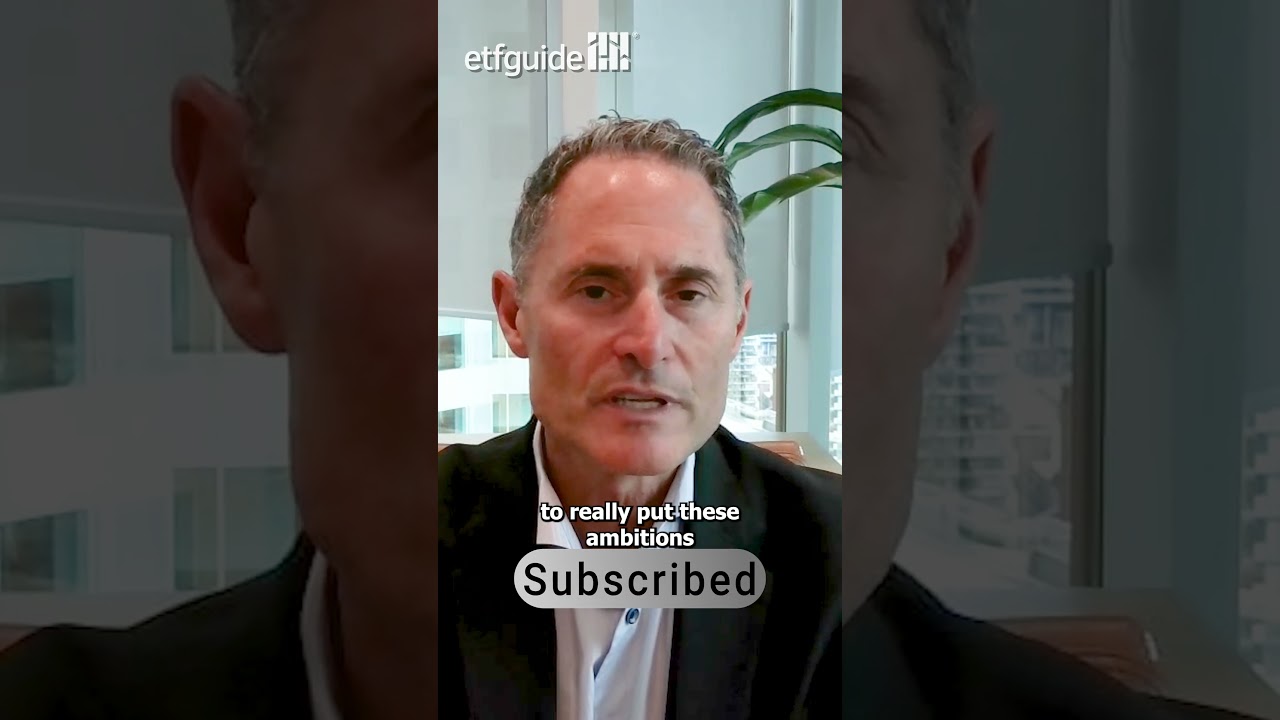
I think by having an allocation to both gold and silver, it does help provide some downside protection potential, as well as giving you the critical materials exposure. I'm Thalia Hayden with ETF guide. It's nice to see you again.
Despite rising market volatility, the global energy shift continues, and so does the demand for critical materials. But how will global trade wars impact the market, and how can investors and advisors position themselves for the opportunity ahead? Helping us to get to the bottom of all of it is Steve Schall, director of ETF product management at Sprott Asset Management. Steve, welcome to the program. Great to see you again. It's great to be back, thanks for having me.
Yes, let's get started. There's a lot of uncertainty in the markets right now. What impact is this having on critical materials? There's definitely no shortage of news flow over the last several months here, and that's having a number of impacts, particularly as it relates to critical materials. In many ways, the uncertainty is often worse than bad news, because what we're seeing is market participants are trying to digest the information and figure out exactly what that means. What we're seeing is, in many cases, market participants are actually paralyzed by the uncertainty.
When you start looking at some of the critical material sectors, uranium is a place where the utilities are very much watching what's going on in the enriched uranium market. New developments as it relates to Russia and the enriched uranium that they can provide to Western countries is top of mind. You start looking at some of the other commodities, like silver and copper, we see pricing dislocations happening where metal in the United States is more expensive than in other parts of the world. In some cases, market participants are looking to arbitrage those pricing differences.
We also see end users or manufacturers, in some cases, are actually starting to frontload purchase orders so that they can get ahead of any potential tariffs that might be coming down the pike. All this is kind of sending some mixed signals within the market, and I suspect what we'll end up seeing once all this shakes out is we'll see an effort to reshore back into the United States. I think we're starting to see some companies make announcements around moving manufacturing to attempt to get around these tariffs.
Steve, how about investors? How have you seen them navigate the turbulent markets? As far as commodities are concerned, one commodity that we've seen a lot of interest in isn't a critical material, but gold has been a place we've seen investors over the last two or three months on the physical side actually start to place a lot of investments and buy ETFs in general. If you look at uranium, the second half of last year, we saw investors showed a preference for moving downstream away from miners in a certain extent. We're starting to see signs that that downstream trade might be softening, and we're starting to see continued flow into our UR uranium minor ETF ticker URM and our Junior uranium minor ETF ticker URJ, which has steadily grown assets throughout the year through investor flows.
Finally, I think what we're seeing in some of the other commodities have been out of favor recently, things like nickel and lithium and copper, we're starting to see investors start to kind of dip their toes back in there and in many cases look at this as a potential buying opportunity. So let me ask, how does supply and demand play in the investment rationale of critical minerals?
It's one of those aspects that's really important and really supportive of the longer term thesis. When you start looking at things like technological innovation and the transition to cleaner energy sources, that's really bullish in our view of things like uranium and copper and silver. These are three metals where we're not seeing miners are able to increase supply in any meaningful way very easily. There tends to be a very long lag, could be a decade or more to get new projects from discovery up to mining and to start producing.
In uranium's case, when we look at the mines that are either already open or planned to be open over the next several years, we're still expected to be in a uranium deficit as it relates to the ongoing needs of utilities. Copper is in a unique situation because a lot of the large deposits and easy to access copper have been very much depleted where we're seeing declining or grades and those higher quality deposits aren't coming as quickly as they once have.
Lastly on silver, that's a unique critical material because of the materials that we follow. It's not principally mined by many companies, 72% is actually mined as a byproduct, meaning that higher silver prices don't necessarily mean that miners will increase silver production. You mentioned the uranium deficit. Uranium and uranium miners had a turbulent 12 to 15 months, so how should investors be thinking about this sector?
It really was kind of a tale of two different stories over the last 15 months or so. Around this time last year, we were coming off recent highs in the physical uranium market, but what I would tell investors is to stay focused on the long term. These uranium in particular and a lot of the critical materials are still emerging asset classes, even though we've been mining them for decades. You tend to see a lot of volatility, but the main thing to focus on with uranium is that the fundamentals have not only stayed the same, they've actually improved over the last year.
We're not seeing utilities really step into the market in any meaningful way. There's a little bit of a staring contest between miners who don't want to accept what they believe to be undervalued prices for their uranium, and then also on the other side you have utilities which aren't willing to spend higher prices than what current prices would otherwise dictate. There's a little bit of a stalemate happening there, but at some point utilities are going to have to come back to the table. They're going to have to replenish the supplies that they've been drawing down over the last number of years, and we expect moving forward that that fundamental under production story remains intact.
If trade wars lead to a softening global economy, how would copper be impacted? Copper is one of those metals that's in a much different position than it was 10 or 15 years ago when it was really reliant particularly on the Chinese economy, but the global economy in general. We've actually seen a lot of the investment in copper comes from the energy transition. Last year was almost $2.1 trillion invested in the energy transition. It's 11% increase over 2023, so that's acting to give a kind of a base level of demand for copper.
We also have the increasing reliance on artificial intelligence. That's very much copper intensive as we look to build out electricity grids to support the growing energy demand, whether it's through the energy transition or artificial intelligence. These are two aspects of the copper market that weren't really as prominent 10 or 15 years ago, and we think should help cushion any potential slowdown in the global economy.
Steve, would you say there are certain critical materials that may hold up better in a deteriorating global economy? There's three that come to mind. Uranium being the first, as we talked about, the fundamentals are very strong there. Uranium tends not to move in lock step with other asset classes, so it can provide some diversification to a portfolio. Very similar to uranium, copper is kind of starting to fall into that story as we're looking at increases in electricity demand. Finally, I'd say silver is another area where we're seeing a lot of support for the metal moving forward.
It tends to do well in periods of geopolitical uncertainty, economic uncertainty, market volatility, currency debasement, falling interest rates, those types of volatile environments because it is still not only critical material but also does maintain a lot of those precious metals qualities. You mentioned silver. I know Sprott has recently launched the Sprott active gold and silver minor ETF ticker JBUG. What can you tell us about how the fund is managed?
JBUG, which is how we refer to it, it's our first foray into active management. It's a logical extension of our precious metal suite, most recently which was our silver miners and physical silver ETF back in January. The fund is focused on investing in gold and silver miners, predominantly so it's miners, development exploration companies, royalty streaming companies. There is the ability for the portfolio management team to invest in other precious metals like platinum and palladium, though we would expect those exposures to be relatively small over time.
The thing that makes this unique is precious metals is really where Sprott's made a name for itself. The investment team has about over a century of experience in the precious metal space, and over that time they've really developed deep relationships within the mining industry, which comes in very handy when they're doing over 200 site visits a year to really understand management structures and which management teams may have the resources they need to properly manage the portfolio. They also do up to 30 site visits a year all over the globe, not just located in the United States and Canada. We actually have a financial geologist on staff that is part of the investment team that is very much involved with that.
Not only are the portfolio management team looking at things like capital structure and management capabilities, they also have their own sensitivity models where they're looking at things like changes in costs or the price of the underlying metal or how taxes will impact the underlying companies. Sticking with JBUG, how might changes in the geopolitical landscape impact the ETF?
JBUG is a little unique because it gives you that gold and silver exposure which have their precious metal qualities, but when you look at silver it's also critical material, so it's a way to get exposure to both precious metals and critical material in one ETF. You do get those diversification benefits that we discussed with the precious metals, but specifically when you start looking at how gold miners and gold equities stack up relative to the S&P 500, what you'll see is in general gold miners tend to be undervalued by about 40% relative to the S&P 500. They have about 50% higher dividend yield, lower levels of debt, they're less leveraged, and from a profit margin perspective it's about 35% higher.
I think by having an allocation to both gold and silver, it does help provide some downside protection potential as well as giving you that critical materials exposure. All right Steve, we learned a lot this episode. Thank you so much for your timely insights and keep up the great work. Happy to be here, thanks.
That does it for today's episode of Shifting Energy. Thank you for joining us. If you enjoyed the show, please tell us in that comment section below and hit that like button. To learn more about the critical materials and ETF we discussed on today's program, be sure to visit Sprott etf.com. Finally, if you missed previous episodes of Shifting Energy, hit the Shifting Energy playlist to catch up. I'm Thalia Hayden with ETF guide, thanks for watching and we'll see you next time.