Commodities Investing: Gold, Scarce Commodities and Oil and Bitcoin ETFs
Hello everyone, I'm Stephanie Stanton with ETF Guide. Welcome to the show. Well, commodities have been standout performers led by precious metals like gold and silver. What's behind the move and what ETFs offer a way to participate? Well, joining us to discuss that and more is John Love, CEO with USCF Investments. Hi, John. Welcome to the show. It is great to see you again.
Hi, Stephanie. Thanks for having me again. You are very welcome. So, gold and silver, let's break this down. Gold and silver climbing rapidly as trust among nations deteriorates. A weak US dollar plus runaway national debt are some other big concerns. How much of this move in precious metals is safe haven demand versus structural long-term drivers?
I think both of those things that are actually a bit related, but before I go into that, I should mention we've just had two days where there's been a massive correction in those steep runups. Silver this year was on a tear. It was up 63% a few days ago. It's plummeted about 30%. Gold about 13% as of just the last two days. But I think that the long-term drivers that you mentioned are still in place. And I do think they're related. I mean, I think some of this safe haven demand and fear is a reaction to the structural things that are happening in the world.
What we've had over the last couple of years is central banks aggressively buying gold. That may have tapered a little bit, but they're certainly not out there selling their gold, and they are still there are still purchases going on. But I think investors are also just reacting to just so much uncertainty even when the stock market is climbing. We're at all-time highs, and there's just policy reversals and new things that we haven't seen in our lifetimes taking place. So we have the dollar somewhat declining coming off of all-time high or not all-time highs but coming off of high levels and you know just a lot of policies that concern people.
So I think that those things are connected and I think that the fundamentals for gold and gold at least is there and silver usually keeps pace with gold and sometimes as you get into far into a rally silver takes off platinum as well and that's kind of what we've seen. We've seen some steam come off. But I think you know it could be choppy for a while but looking ahead there's still some significant upside there for both.
Yeah, makes sense. Maybe a little bit of pullback as you said, but still very strong when you look at it. Overall, most gold funds offer straightforward bullion exposure, but the USCF gold strategy plus income fund, and your ticker is USG. It layers in an income strategy. So, how does that change the role USG can play in an investor's portfolio compared to say conventional gold ETFs?
So we when we launched USG we were looking at gold markets over time and you have errors where over the last 25 years overall gold has actually outperformed the S&P 500 by a little bit but you've had you know periods in there where it was very painful to old own gold or gold you know really didn't do anything and then over the long term you know we've seen the same the same thing we've seen since you know gold was monetary policy changed in 1971 gold has had the opportunity to run ahead of inflation, run ahead of the dollar. It's not just a you know inflation protection, but it's actually a potentially a risk asset.
Anyway, when we looked at this and we considered, okay, you've got, you know, strong up periods, you've got sideways periods, you got down periods, a covered call strategy where you're selling calls on the gold that you own, the gold positions that you own tends to improve performance over the long run. Now, we launched this fund right at the start of the most recent, you know, three-year run of sup, you know, just superb gold returns. So, we've trailed a bit, but if you get to the point where gold is toppy, where it goes sideways or even goes down, the income can offset some of that and actually add to your long-term risk adjusted returns.
While we're talking about metals, let's talk about another metal that is gaining some attention. We're talking about copper. A 2026 study by S&P Global about the future of AI and electrification highlighted the crucial role of copper. A recent post on USCF's Substack feed about the AI revolution fueling commodities demand also noting long-term structural shortfalls in copper supply. So given that, how should investors and traders think about copper's role in their portfolios?
So we're telling the same story about copper that we have been for the last few years. it really came to the forefront last year. You'd had a number of years where, cropper supply has just has not kept up with demand and the forecast demand just keeps getting bigger and bigger and bigger. Whereas you have just, you know, there's just not enough new supply, new mines being open. There's, in fact, there's strikes and things like that. So last year was a very tumultuous year. you had you know tariffs premiums on US copper versus London copper all kinds of crazy things going on but ultimately copper was up our our on copper ETF was up 38%.
And we think that was finally you know this theme playing out that there is not enough copper in the world to meet future de demand. copper is more tied to the global economy especially manufacturing at least historically than other most other commodities if not all other commodities but we think that the story is still in place that you know with AI centers all of this even if you had a recession a global slowdown that would be a temporary hit that might be even offset by some of this glut that I mean not glut the opposite the you the the lack of supply relative to demand. So, we're still pretty bullish on copper. Great year last year. But I think there's still room for this to go on into the next five, even 10 years.
We're going to talk about the USCF Summer Haven Dynamic Commodity Strategy No K1 Fund. And your ticker there is SDCI. It remains one of the top ranked commodity ETFs and now carries a fivestar morning star rating. So, congrats on that. for advisers and ETF investors considering commodities, what distinguishes SDCI as a compelling addition to a diversified portfolio?
That's a great question following copper, the comments on copper because what SDCI does is we're trying to give you a broad commodity exposure, all the benefits of commodities as an asset class, but we don't want to own the entire commodity universe at a time. We want to try to do a more investable approach. So what we've done, we have high correlation or beta to traditional commodity indices. We really have two goals.
The way we're doing this is we have we own something in every commodity sector. So we have a metal, we have an energy, we have a precious metal, a livestock, so on and so forth. But what we're trying to do is let's whittle it down and let's look for one particular thing and that's scarcity. What commodities are likely to be scarce? What is the market telling us? and what's likely to anything that's likely to be scarce is likely to more likely to rise in the future than fall. So that's what we're really allocating to.
We essentially are holding half the liquid commodity future at a time or commodity futures market at a time rebalancing the equal weights once a month so that we're giving you equal exposure to wherever these stories may come from these supply demand stories. just because oil and gold make the headlines. It can come from silver like it has in the last two months. It can come from cocoa. It can come from cattle as we've seen. And so we're equal waiting. We're holding half the universe. And we have a systematic rules-based approach that just looks for scarcity. And that has tended to work well over the life of the fund.
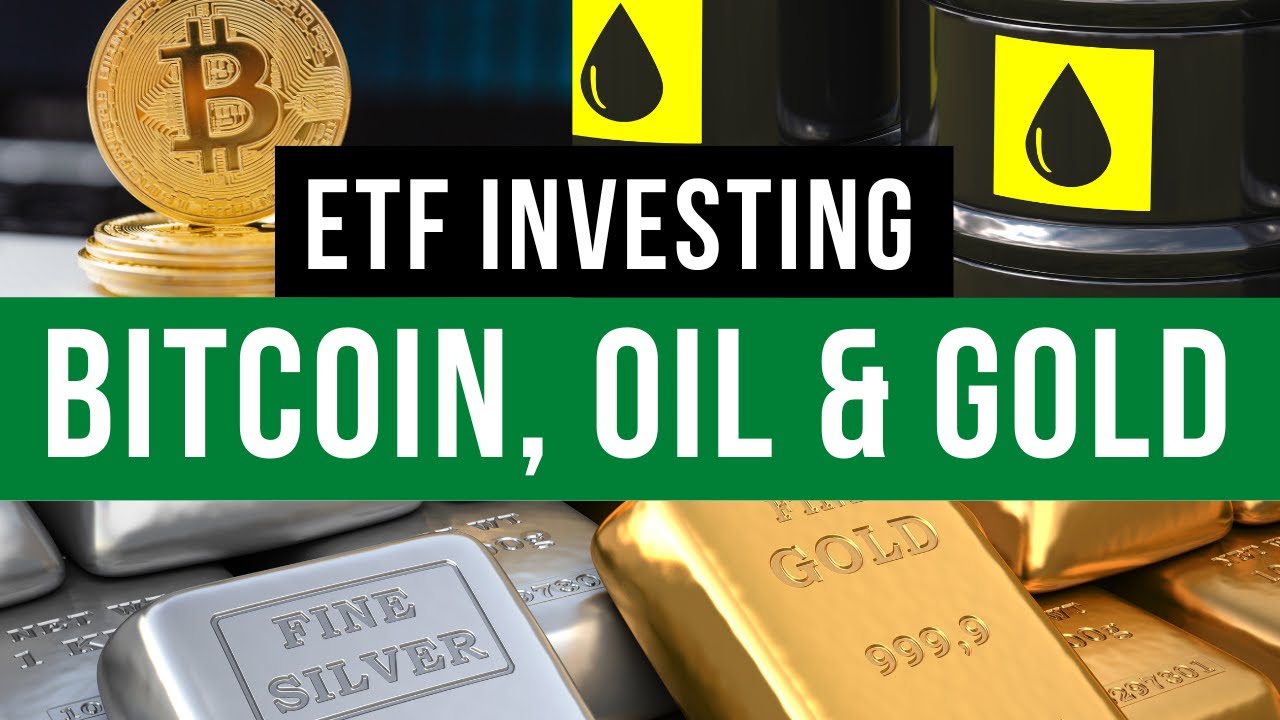
You mentioned oil, the USCF Oil Plus Bitcoin Strategy Fund, and that ticker is WTIB. It is the first ETF to combine exposure to both crude oil and Bitcoin futures within a single fund. So congrats on the recent launch of that. Tell us more about it and the strategy and what type of investors that this fund might appeal to.
So WTIB is probably for investors that are looking for a little more a little more juice, I guess, in their investment. It's it's a fund that uses leverage. Everybody's familiar, I think, with 2x funds, like a 2x Bitcoin fund. The difference here with with is, you know, with 2x Bitcoin, you're essentially buying two apples. And in this case, what we're doing with leverage, you're getting an apple and an orange.
A traditional portfolio, you get a slice of an apple and a slice of an orange. What we're doing is we're taking these two uncorrelated assets. They're they have a correlation of almost zero, which means they basically march to their own drummer. We're taking those, holding them. For every dollar you invest, it's $1 bit Bitcoin exposure, $1 oil exposure. And essentially using leverage in that way to give you an apple and an orange in the same fund, two for the price of one.
And the way that plays out in your portfolio is leverage does increase risk, but it's not on a daily basis double the risk of a single asset. What it's doing instead because of that non-correlation, it's going to be higher risk than a 1x fund, but it's giving it giving you these two exposures separately. So, it's kind of a way for people to play. If you think that oil and Bitcoin are things that you want to own for a period of time, then this this gives that to you in one basket. It's also if you're bullish on both of those for a fixed horizon, you can make a trade based on both both of those instead of having to choose one over the other.
Do you think this is more short-term, long-term? It probably is more for short-term traders, but anyone that that is looking for an allocation to oil and to Bitcoin and wants to maintain that whatever your time frame, this is a way to do it without having to pick one or the other.
All right, natural gas. With natural gas prices pushing higher in 2026, what should investors understand about the underlying catalyst behind the rally? Break it down for us.
Sure. Well, the rally was absolutely storm driven. we see as we look at the winter months over you know well the entire history of natural gas but if you just look at the last 5 10 years you often see spikes in December, January, sometimes February when you have these storms come in these these winter storms it usually drops back down very rapidly. In the case of this most recent storm it lasted longer than than storms in recent memory. It took out more infrastructure sideline more infrastructure than storms in recent memory. So, it's taken a lot of natural gas out of the system.
We came into the winter with an excess of natural gas relative to last year and the 5-year average and so on. And now we're we we've taken a lot of that out. So, that fueled the rally. As the storm dissipates, naturally, natural gas is probably going to start dropping back down. It may not drop back that quickly to previous levels, pre-torrm levels, just because so much has been taken out of the system. But I what I would say is unlike you know past storms where you see a you know this and this we've seen this sustained and now you know the question is how how quickly do we return to normal.
Also at the same time we're exporting more liquid natural gas. You know there's more demand for natural gas in general. So we'll see how that plays out as we get into the coming months. But it certainly made for an interesting start to the year.
Yeah it has indeed. And if Pakatonyi Phil has anything to say about it, I don't know. We might see these cool temperatures continue. All right. Well, one more thing before you take off. Oil markets, you know, they've been volatile this year. Venezuela's production outlook, of course, a big wild card. USCF's Substack Feed had some great insights actually about all of this. Can you tell us how significant is Venezuela's role in shaping global oil supply and some of the dynamics going on right now? Despite the headlines, surprisingly, not very much.
Venezuela was at one point a major oil producer. It did produce what's called heavy sour crude, which is a different grade of crude than we than is you people are more familiar with light sweet crude. And that's what most of the refineries in the US are equipped to manufacture or to process. But nevertheless, I mean it was Venezuela does have a tremendous amount of oil. problem is they've nationalized their foreign people with foreign assets there twice.
There's plenty of oil in the US and around the world. So the oil majors are not as we've seen with with recent push to try to get them on board. They're not eager to jump back in there. And even if they were, even if they're compelled to do so, it's going to take some time for Venezuelan oil to to come back online. So it could certainly play a part many years down the line, but right now I think any headlines we see on Venezuelan crude are a blip and it's really continue going to be continue to be continue to be driven by US production and OPEC production as we've seen over the last 5 to 10 years.
Very fascinating. Always great insight. John, thank you so much for dropping by.
Thank you very much. Good to see you. And for deeper insights on commodities and ETF investing, subscribe to USCF's Substack or you can visit uscfinvestments.com. You will also find both links below. That does it for today's episode of Spotlight. If you enjoyed the show, please tell us in the comments section below and by hitting the like button. I'm Stephanie Stanton with ETF Guide. Thanks so much for watching. We'll see you next time.